
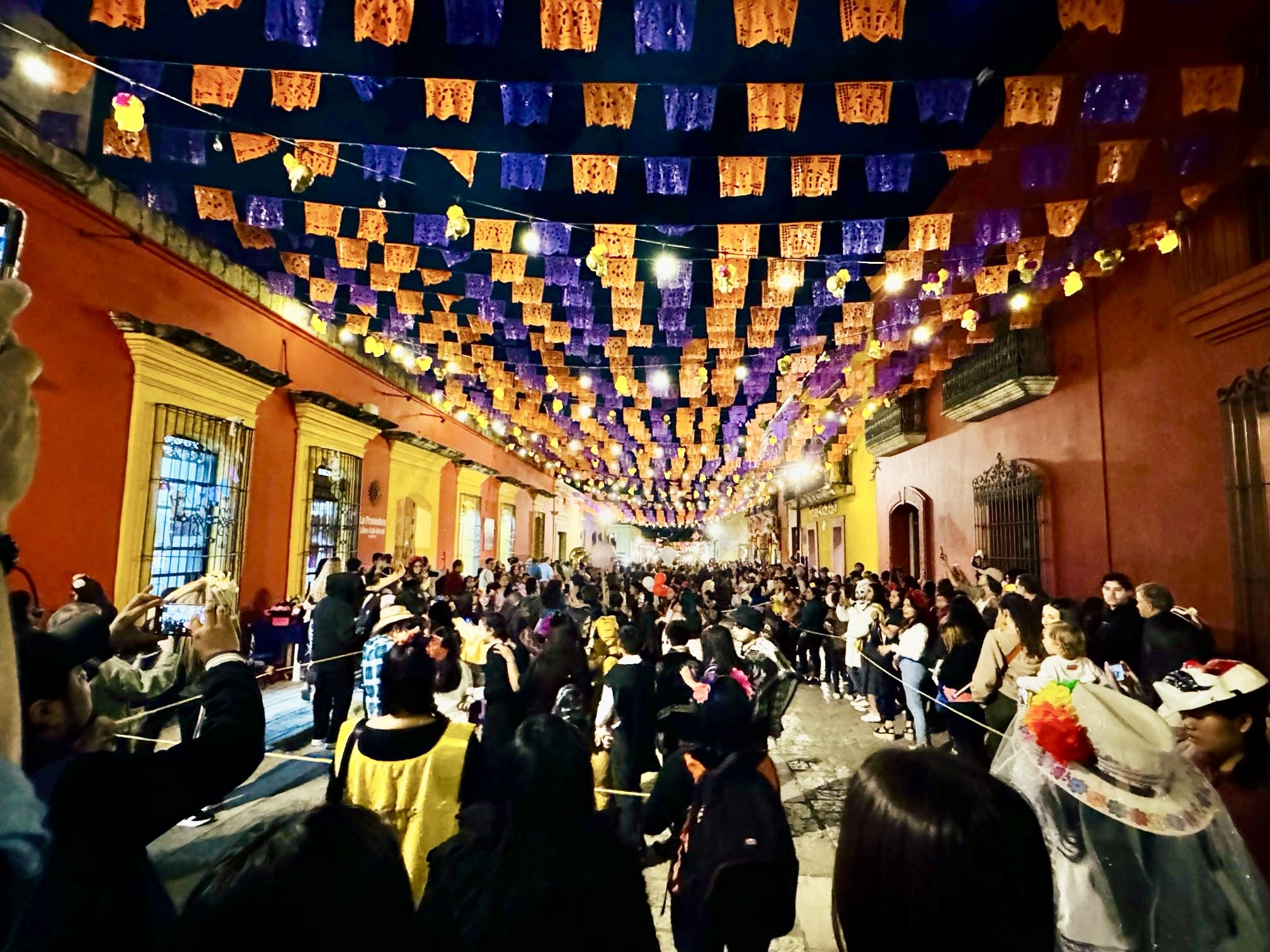
Traveling to Día de los Muertos in Oaxaca, Mexico, had been on our list for years, partly because the city seems made for the holiday. The historic center fills with bright orange flowers, painted faces, music, ofrendas (altars) and processions winding through the cobbled streets. Catrina skeletons appear everywhere, while local families prepare to visit and decorate the graves of loved ones. The whole city seems to turn into a festival of the dead, and we wanted to see it firsthand.
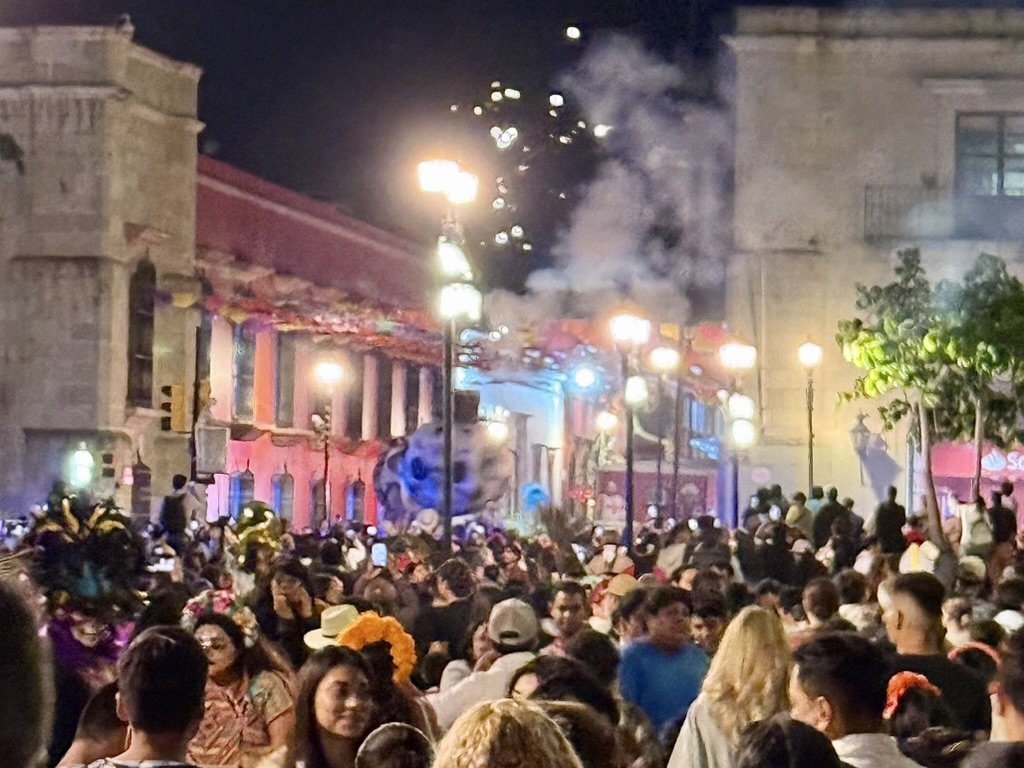 Parades and celebrations take over entire streets in downtown Oaxaca.
We could walk out of our hotel in the evening, hear a brass band somewhere down the block and suddenly find ourselves following a comparsa with several hundred other revelers. Yet the same families dancing in the streets might later spend hours graveside at a cemetery, honoring someone who has passed.
The Magic of Día de los Muertos in Oaxaca
In Oaxaca, revelry and reverence overlap, often within the same evening. The parades are thrilling, but the cemetery visits, family traditions and smaller village gatherings give Día de los Muertos its personality. Once we saw how naturally the living and the dead were included in the same celebration, the holiday felt much more personal than the colorful street scenes suggest.
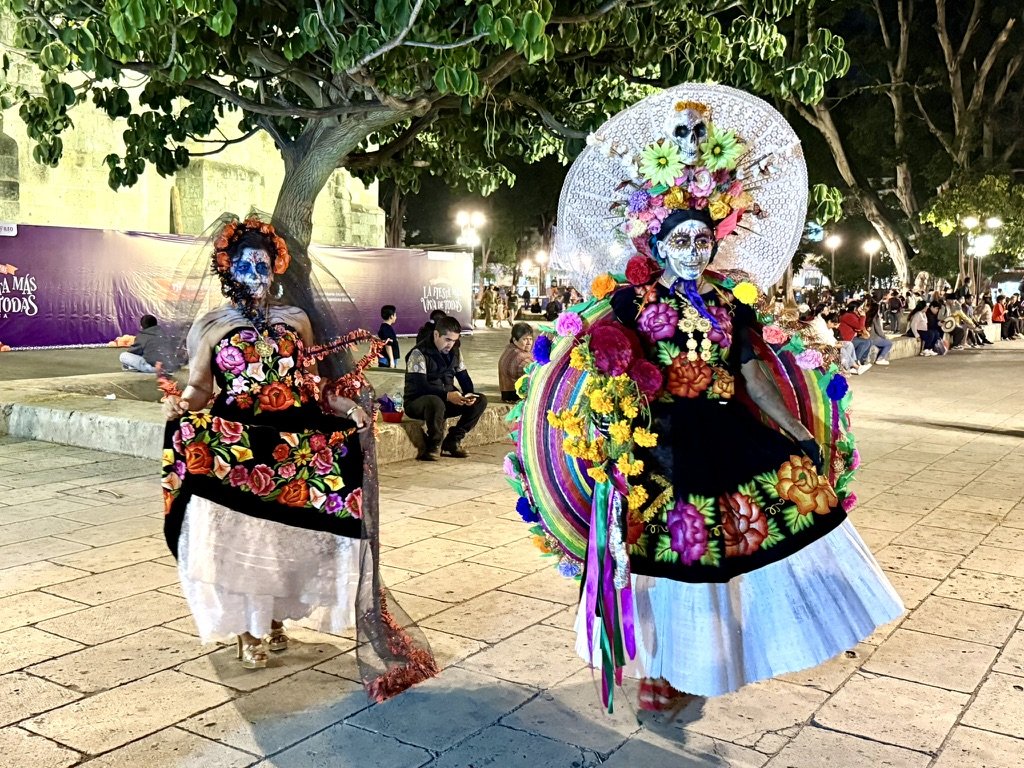 Revelers go all out on costumes during Dia de los Muertos celebrations in Oaxaca.
What is Day of the Dead Anyway?
Día de los Muertos, or Day of the Dead, is a Mexican tradition built around the belief that deceased loved ones remain part of the family and can be welcomed back in memory each year. Its roots stretch back to Indigenous Mesoamerican customs later intertwined with Catholic observances introduced by the Spanish. Today, families honor those who have died by creating ofrendas filled with photographs, favorite foods and personal keepsakes, decorating gravesites, sharing meals, telling stories and gathering together in a spirit that is often warm and social rather than solemn.
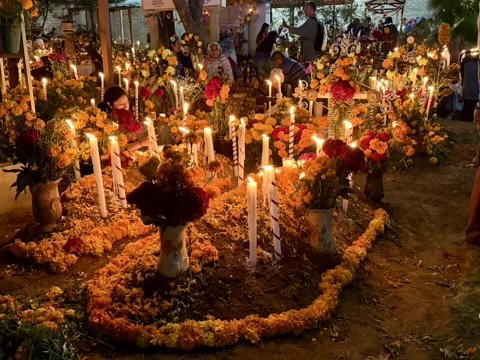 Candles, flowers and colorful decorations adorn gravesites for the festivities.
The holiday centers on November 1 and 2, although festivities in Oaxaca often begin several days earlier. Customs vary across Mexico, but cemetery visits, family gatherings, music, special foods, marigolds, candles and public processions are common.
Day of the Dead is Not Halloween
Despite the skulls and late-October timing, Día de los Muertos is not Mexico’s version of Halloween. Halloween grew mainly from European traditions tied to All Hallows’ Eve and evolved in the United States into costumes, trick-or-treating and spooky fun.
Día de los Muertos has different roots and a different purpose, focused on remembering specific loved ones and welcoming their memory back into family life. The holidays sit side by side on the calendar and sometimes borrow visual cues from one another, but in Mexico, Día de los Muertos remains much more about family and connection than scary costumes and candy.
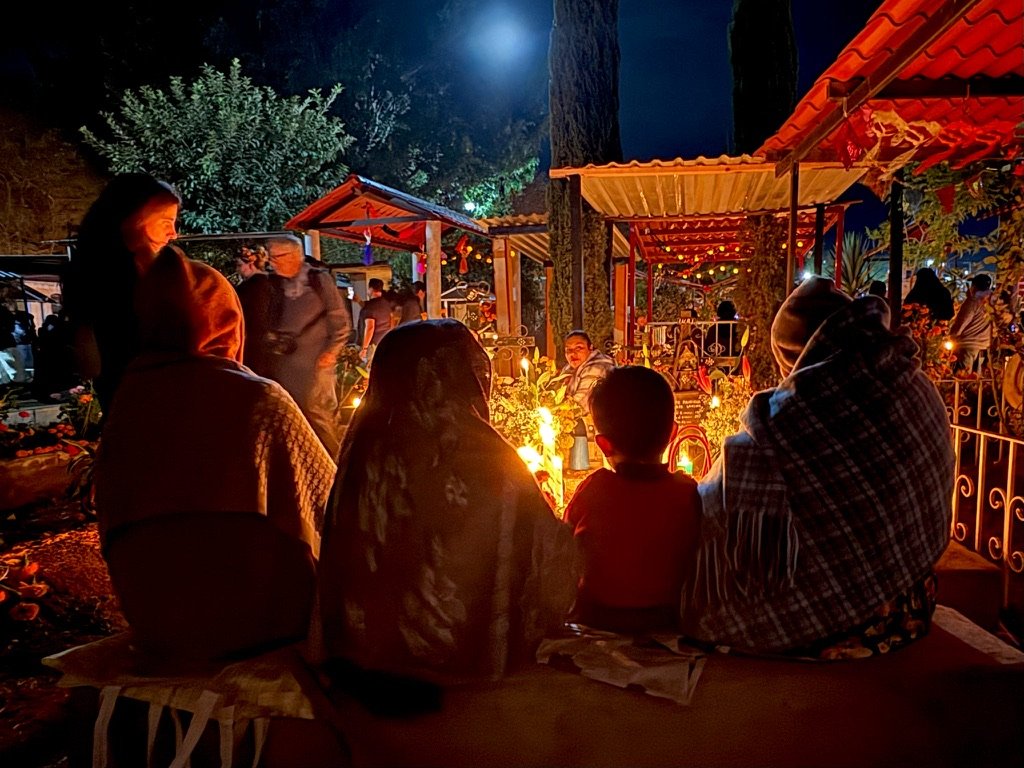 Families gather at the gravesites of loved ones to honor their memories during Dia de los Muertos.
How to Celebrate Día de los Muertos in Oaxaca
We stayed at Hotel Quinta Real Oaxaca, a former convent in the historic center, and one afternoon the hotel brought in artists offering maquillaje de calavera. Triton and I decided to join the fun and get our faces painted.
We sat beneath the hotel’s old stone arches while the artists created black, white and brightly colored designs across our faces. These artists were remarkably skilled, giving each person a distinctly different design rather than repeating the same pattern. We bought hats at a nearby outdoor market afterward and felt properly dressed to join the crowd.
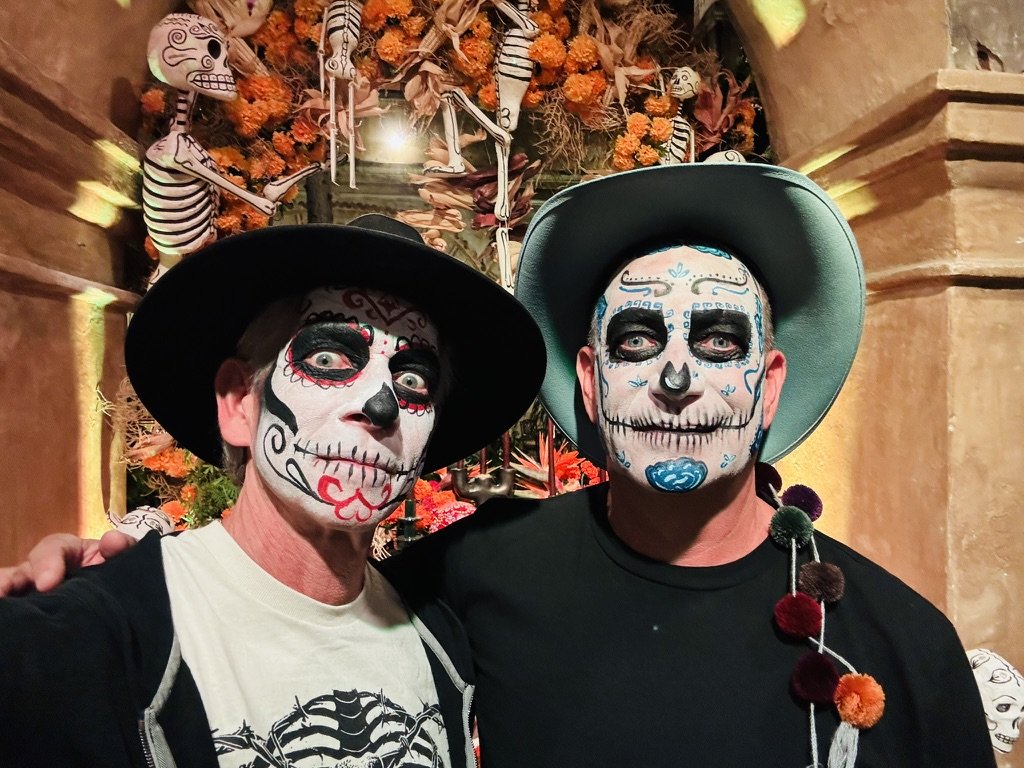 We joined the crowds getting their faces painted like decorated skulls.
Outside, we realized our painted faces were fairly modest by Oaxaca standards. Entire families had gone much further, with intricate designs and costumes coordinated down to the last flower. Even the littlest kids ran around looking like tiny members of the afterlife.
A few hours later, we saw those same painted faces when we visited two cemeteries outside the city.
 Many face painting artists set up stations throughout downtown to help revelers get in the spirit.
A Night at the Cemetery
The cemeteries were busy well after dark, with festivities lasting past midnight. Families had covered graves with flowers, candles, photographs and personal objects connected to the people buried there. Some sat together eating and talking, music came from different corners of the grounds, and children played around the headstones. It could have felt macabre, but instead it seemed wholesome and sweet.
None of this was staged for visitors. These were family gatherings, and we were guests passing through. We followed our guide’s lead, kept a respectful distance and asked before taking close photographs. Being welcomed into the cemeteries did not make these private family moments ours to interrupt.
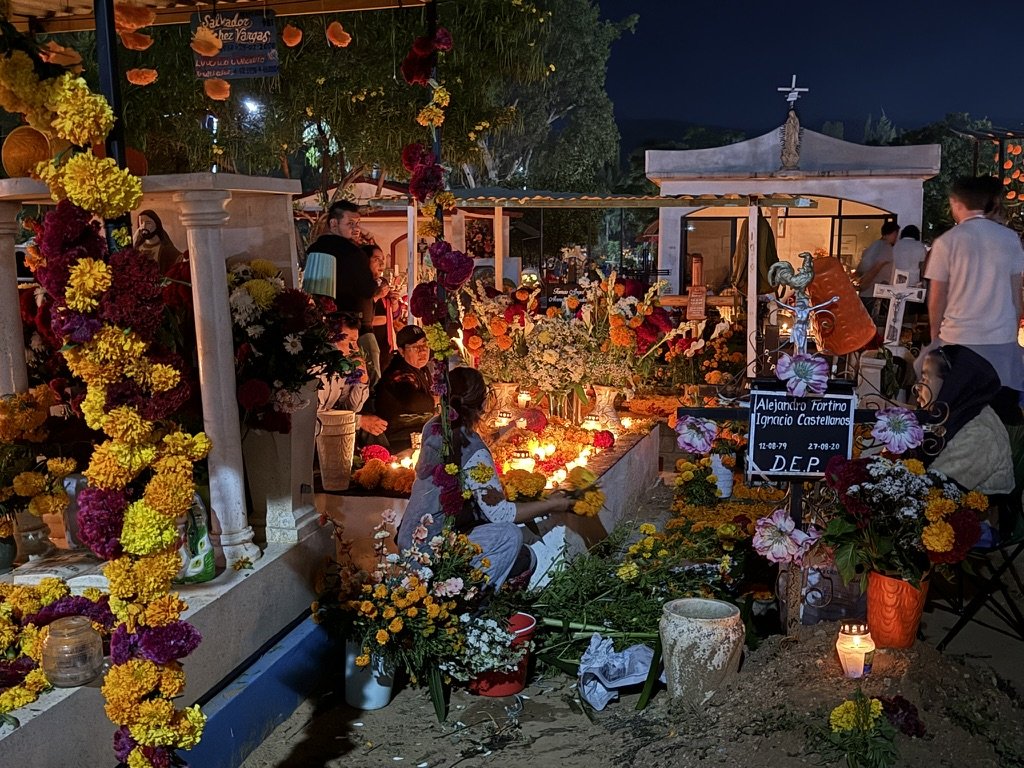 Cemeteries are filled with joy as families remember loved ones.
There was emotion and sometimes a sense of loss, but also laughter, conversation and food being passed around. Families remembered those who had died by spending time with them again, and the evening had a warmth I had never associated with visiting a graveyard.
Stay in Downtown Oaxaca to Celebrate Properly
Hotel Quinta Real sits in the heart of Centro Histórico, so we could walk almost everywhere we wanted to go. This was especially useful at night when processions and street closures made driving difficult and taxis nearly impossible to flag down.
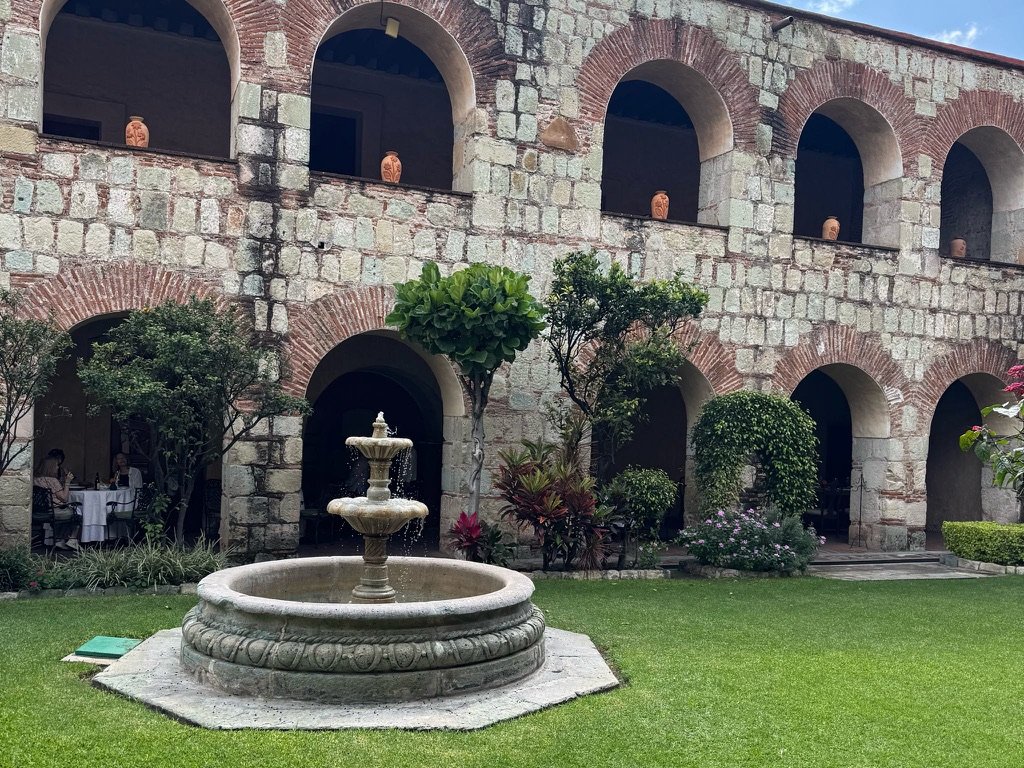 Hotel Quinta Real was one of Oaxaca’s original convents before being converted to a charming hotel.
The hotel itself is a luxurious respite. Stone passageways open onto courtyards, gardens and fountains we imagined had been there since the building was a convent, with nooks and little quiet hideaways that give the place so much character. During Día de los Muertos, ofrendas, calavera figures and cempasúchil appear throughout the property, adding another layer to the atmosphere without making the hotel feel decorated for tourists.
We also spent time by the pool in the warm afternoon sun, festive cocktail in hand for cultural enrichment. Returning for a swim before dinner became a much-appreciated habit. Breakfast is included in the room rate at Quinta Real, with a generous buffet of local favorites and rich, dark coffee.
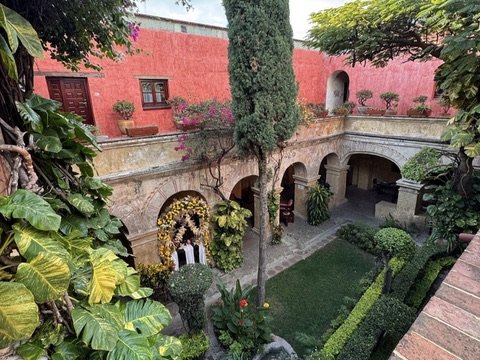 The interior courtyards of Hotel Quinta Real give the space flow and authenticity.
Oaxaca Gives You Plenty of Reasons to Linger Over Meals
Oaxaca is one of those cities where dinner can occupy an entire evening and nobody feels cheated out of sightseeing. We ate at some stellar restaurants, and each meal showed us something different about the region’s cooking. Even better, all were close enough to our hotel that we could walk there and back.
During Día de los Muertos, the top spots become hard-to-get reservations, so book well ahead. Our close friends did this for us, and they were lifesavers.
Casa Oaxaca
Casa Oaxaca was one of those places we had heard about long before we arrived, so we made sure to get a table. Only lunch was available, and we were glad we took it. The rooftop terrace near Santo Domingo is a terrific place to settle in, especially with the view across the historic center. We worked our way through dishes that showed how many directions Oaxacan cooking can go, including turkey with dark, rich mole negro, suckling pig with chile-spiced mole coloradito and short rib with the red, fruitier mole manchamanteles.
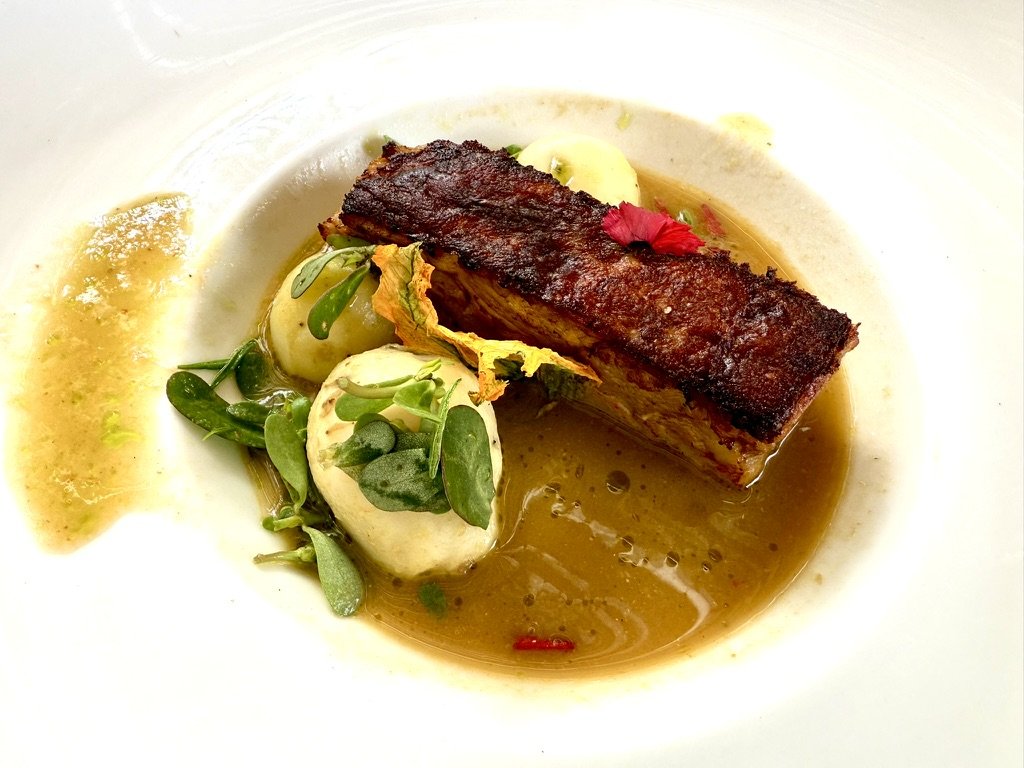 The dishes at Casa Oaxaca are full of flavor and personality.
Los Danzantes
Los Danzantes was one of our favorite meals in Oaxaca, partly because of the gorgeously designed courtyard. We ordered chicken with a sampler of five moles, which made it easy to taste the differences side by side. The sampler included amarillo, manchamanteles, rojo, chichilo and negro, each with its own balance of heat, sweetness and smoke. We also tried pork ribs with salsa borracha that melted off the bone. Los Danzantes has earned a Michelin star, but dinner never felt stiff or overly formal.
 Tasting the different kinds of mole in Oaxaca became an obsession.
Levadura de Olla
Levadura de Olla is the one table I wish we had managed to get. Chef Thalía Barrios García has built the restaurant around the food of her hometown, San Mateo Yucutindoo, with dishes leaning heavily on vegetables, corn, chiles and a cooking style that looks deceptively simple. I want to try the grilled squash with white pipián and mint, along with one of the tamales served with ricotta and two moles. Next time, this is going near the top of the list, and we will be more organized about booking ahead.
Food Trends in Oaxaca
Before this trip, I knew mole was far more complicated than the dark, slightly chocolatey sauce many Americans know. Eating several versions in Oaxaca made the differences more clear. Some leaned smoky and earthy, while others brought more chile, nuts or spice into the mix. We kept ordering it just to compare.
For foodies and wanderers, Mercado Benito Juárez and Mercado 20 de Noviembre sit beside each other near the Zócalo. Both are great spots for exploring unique foods from this region, and we spent a morning wandering through both. Stalls overflowed with chiles, chocolate, breads, cheeses and things I could not have identified without help.
Chapulines were easier to identify because they still looked like grasshoppers. We tried them seasoned with chile, lime, garlic and salt. They were crunchy, salty and actually pretty good.
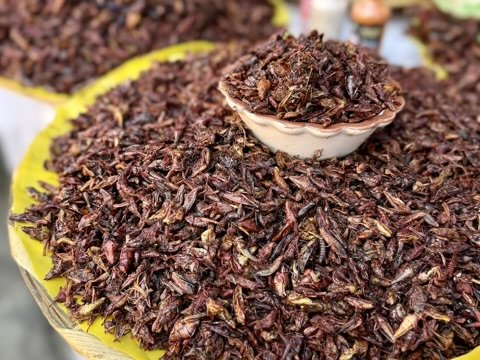 Chaupulines (grasshoppers) are a deep-fried snack that actually tastes like potato chips.
A Couple of Days Outside Oaxaca City
We kept most of our time focused on the city, but several outings were worth making if you have the time.
Monte Albán
Established around 500 BCE on a mountaintop above the Oaxaca Valley, Monte Albán is enormously impressive. Its vast plazas and ceremonial structures are even better with a guide who can explain what you are looking at. From there we continued to San Antonio Arrazola, where artisans carve alebrijes from copal wood and hand-paint them with astonishing detail.
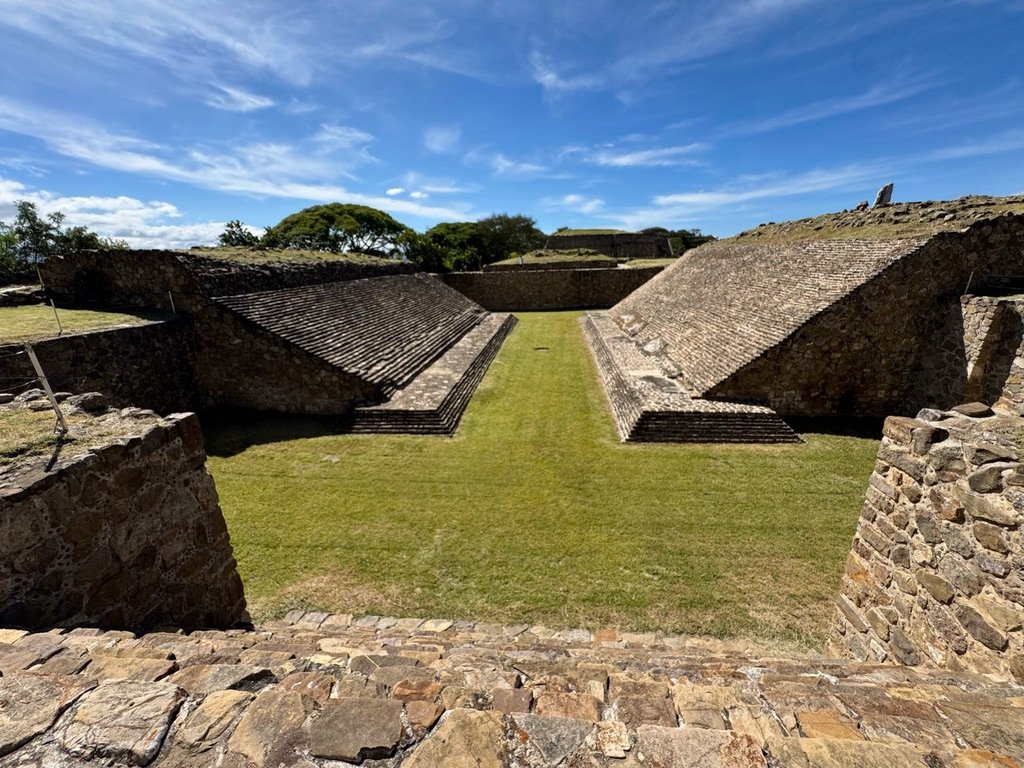 The ruins at Monte Albán near Oaxaca are a worthy day trip.
Mitla
Another day combined Mitla with mezcal tasting. Mitla is known for geometric stone mosaics, and afterward we continued to distilleries including El Rey de Matatlán. We watched the agave production process and then did the obvious thing: tasted several versions. Hire a driver so you can imbibe safely.
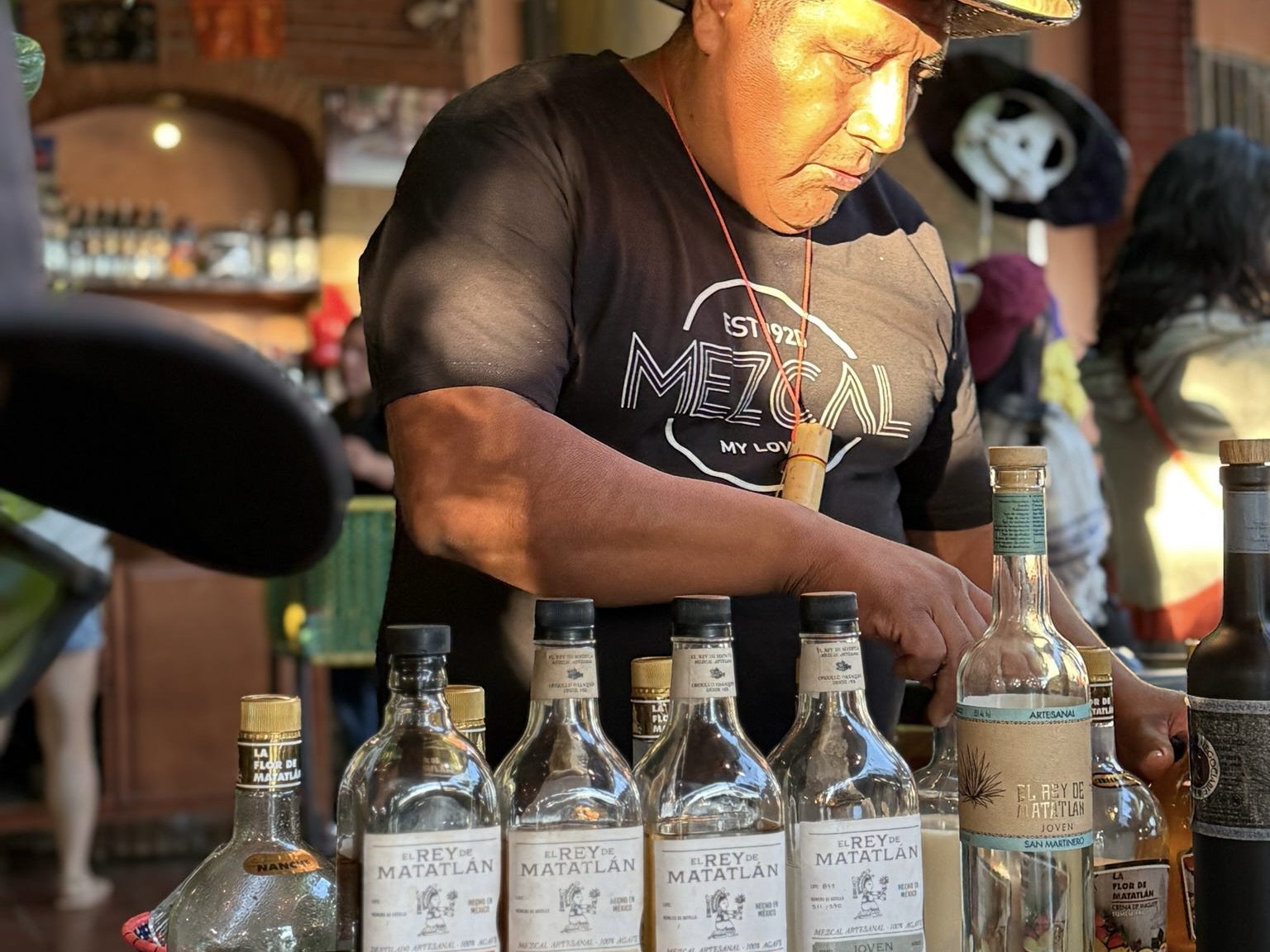 Venturing beyond Oaxaca City allows for interesting experiences like this mezcal distillery and tasting.
Battle of the Bands in Etla
A different night took us into the Etla Valley for an Encuentro, often described as a Battle of the Bands. Musicians from nearby villages marched toward one another from opposite directions, each band playing at full volume while supporters packed into the street between them. Fireworks went off overhead, smoke drifted through the crowd and costumed revelers danced around us. It was controlled mayhem and kept us laughing all evening.
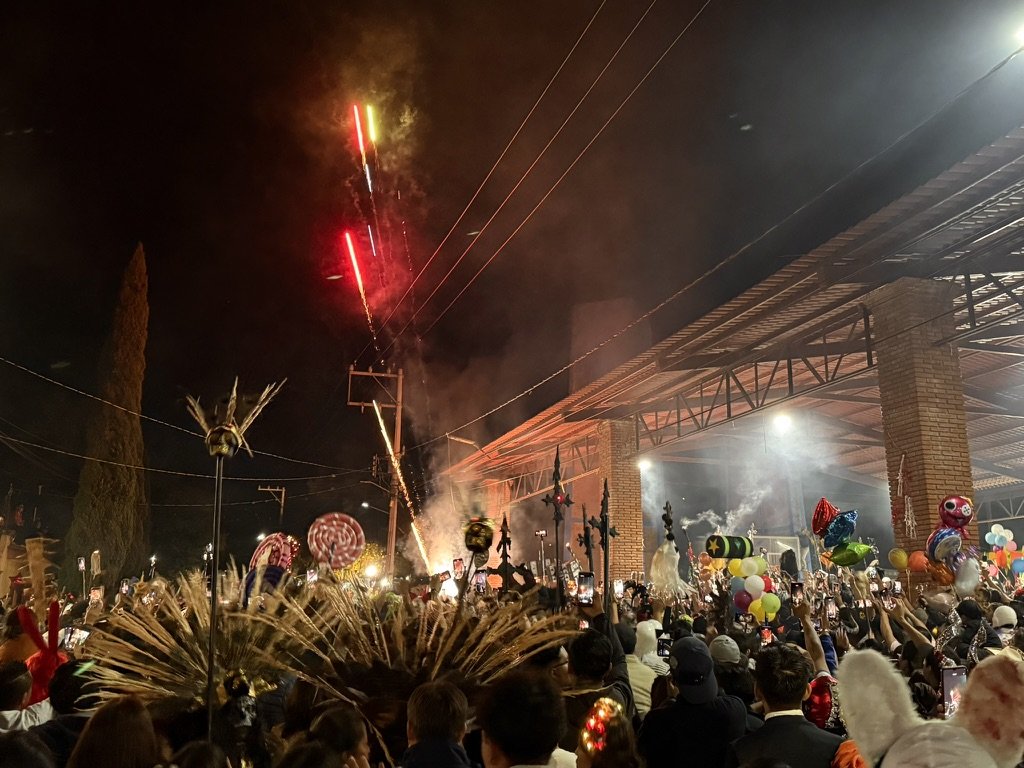 The Battle of the Bands is a raucous celebration in a small village outside of Oaxaca.
If You Go
If you decide to celebrate Día de los Muertos in Oaxaca, book early. And by early, I mean more than a year in advance. We booked our hotel 16 months ahead and barely got the space we wanted. We reserved flights about 10 months before the trip, and prices climbed as the dates approached.
We’re already planning to return in 2027, and yes, our hotel is booked again, 12 months in advance.
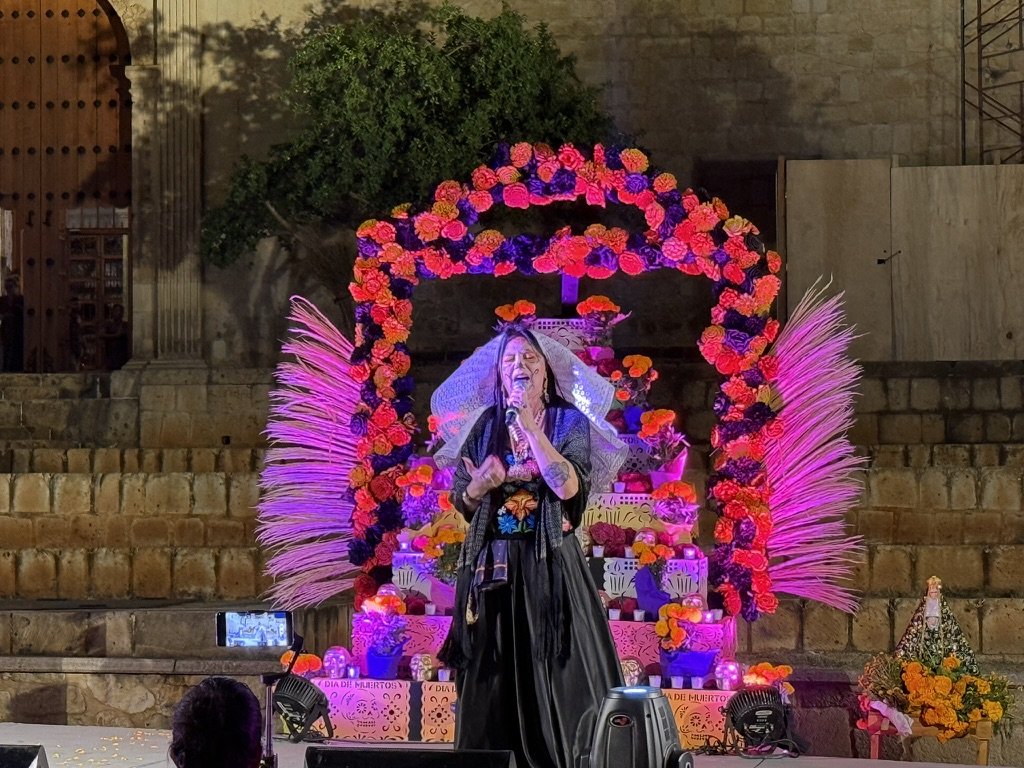 Entertainment spreads throughout the streets of Oaxaca’s downtown during Dia de los Muertos.